Written By: Keith Winn, Catalyst Partners
When people hear the word “fire” they often think of danger or destruction. But when fire is used carefully and intentionally, as is the case with prescribed burns, it can also be one of the most effective tools we have for restoring landscapes and protecting communities.
At Catalyst Partners, the work we focus on is grounded in the public good: health and safety, the advancement of best practices, education, research, and environmental restoration. One land management practice that supports all these goals is the thoughtful use of prescribed fire.
Fire has always been part of North America’s natural landscape. Indigenous communities used fire regularly and intentionally to manage ecosystems, encourage desirable plants, and maintain healthy landscapes. Many of the native plants we see across our region evolved alongside these periodic fires and remain well adapted to them today.
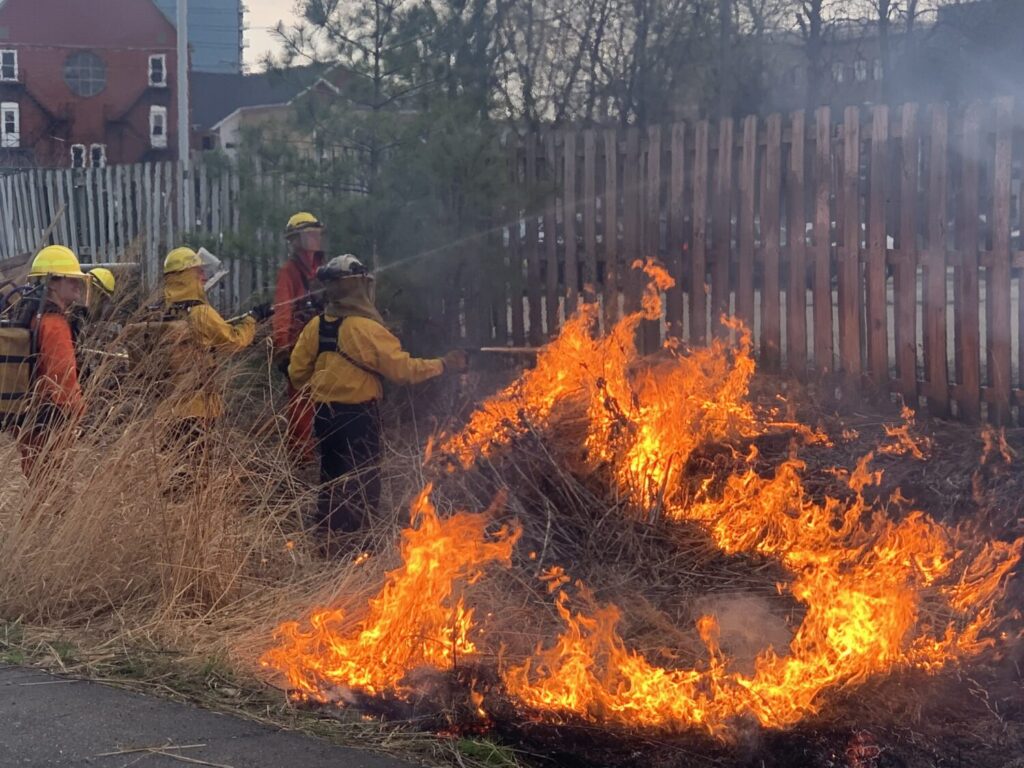
A prescribed burn—sometimes called a controlled burn—is a planned, low-intensity fire conducted under carefully managed conditions. The goal is not destruction, but stewardship. When carried out by trained professionals and under the right weather conditions, prescribed burns can safely restore balance to natural systems.
Reducing Risk While Restoring Landscapes
One of the most important benefits of prescribed fire is reducing the buildup of dry vegetation and underbrush that can fuel wildfires. Over time, unmanaged landscapes accumulate dead plant material that increases fire risk. Prescribed burns reduce these fuel loads in a controlled way, helping prevent the conditions that allow large, destructive fires to spread.
This is particularly important in areas where natural landscapes meet neighborhoods, also known as the wildland-urban interface. Managing vegetation in these spaces helps protect nearby communities while maintaining the ecological health of the land.
Although prescribed burns are often associated with large rural landscapes, small natural areas in urban and suburban environments can benefit just as much. Native plant landscapes, restored prairies, and urban nature preserves all rely on periodic disturbance to remain healthy. Without it, invasive plants and woody vegetation gradually take over.
We saw this firsthand when we first took possession of our 502 Second Street office several years ago. The property was almost entirely covered with invasive species. Nearby sites were managing those invasives largely through chemical treatments. Instead, we chose to restore native vegetation and manage the land using ecological practices, including the careful use of fire.
Native plants respond well to burning because they evolved with it. Many invasive species, however, originated in Europe and did not evolve with periodic fires. As a result, prescribed burns tend to give native plants a competitive advantage while discouraging invasive weeds. Over time, this improves both the quality and diversity of the landscape.
A Practice Already in Use
Using fire as a stewardship tool is not unusual. Land managers across the region have been applying this practice successfully for many years.
In West Michigan, organizations such as the Land Conservancy of West Michigan, Calvin University, the Dominican Center at Aquinas College, and Kent County Parks all use prescribed fire to manage native habitats. The City of Ann Arbor has been managing portions of its park system with prescribed burning for more than four decades.
Of course, safety is essential. Prescribed burns are conducted by certified burn crews and licensed burn bosses who carefully plan every step of the process. Weather conditions, site preparation, and coordination with local authorities are all part of ensuring the work is done safely and effectively.
Learning Opportunities for Communities
Prescribed burns can also serve as valuable educational opportunities. Demonstration burns allow fire departments, park staff, and community partners to see firsthand how the process works and why it is beneficial.
As cities begin incorporating more native plants into public landscapes such as restored prairies to neighborhood pocket parks, these management practices will become increasingly important. Understanding how prescribed fire fits into long-term stewardship helps communities maintain these landscapes safely and effectively.
Fire is sometimes misunderstood, but when used responsibly it is one of the most practical tools we have for restoring ecosystems while reducing risk.
It strengthens native plant communities, discourages invasive species, and helps create landscapes that are healthier, more resilient, and better prepared for the future.
That is good land stewardship, and it’s something worth understanding and supporting.