Written By: Paul Conrad, Catalyst Partners
Optimizing renewable energy strategies in LEED v4 and v4.1 requires a clear understanding of how credits are structured—and when substitutions provide a strategic advantage. For LEED professionals, one of the most effective opportunities to maximize points is the ability to substitute the LEED v4.1 renewable energy credit in place of the two LEED v4 credits.
However, differences in credit structure, tiered renewable energy classifications, and energy modeling implications can significantly impact project outcomes. Understanding these nuances is essential for selecting the most cost-effective and technically appropriate approach.
What is Renewable Energy in LEED v4 and v4.1?
LEED v4.1 categorizes renewable energy into three tiers. Each tier is defined below, along with its relationship to the LEED v4 framework.
Tier 1
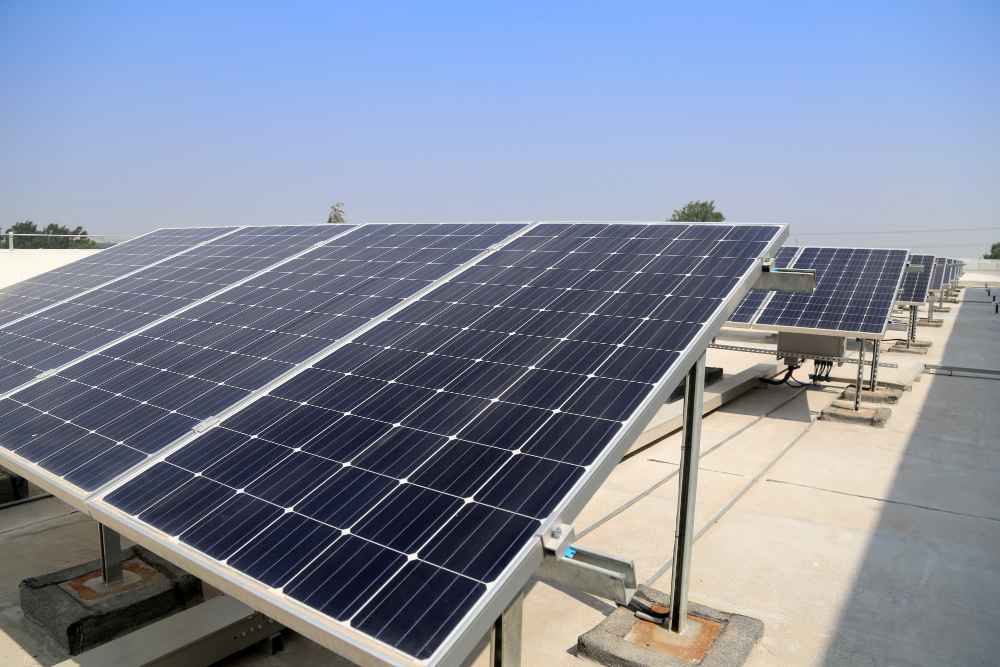
Tier 1 includes on-site renewable energy generation, such as photovoltaic arrays and solar thermal systems. To qualify, the project must retain the associated Renewable Energy Certificates (RECs). This category corresponds to the LEED v4 credit EAc Renewable Energy Production.
Tier 2
Tier 2 refers to off-site renewable energy generated from off-site renewable energy from newly constructed or recently built generation assets (typically within the past five years), or from projects that will become operational within two years of the contract start date. Eligible RECs must be certified by Green-e Energy (or an equivalent program). The asset’s age is evaluated at the start of the contract and remains valid for its duration. This category is unique to LEED v4.1 and does not have a direct equivalent in LEED v4.
Tier 3
Tier 3 includes all other off-site renewable energy that is Green-e certified (or equivalent), as well as captured biomethane. This corresponds to the LEED v4 credit EAc Green Power and Carbon Offsets.
How LEED v4.1 Renewable Energy Substitutes LEED v4 Credits
The LEED v4.1 credit EAc Renewable Energy replaces both LEED v4 credits: EAc Renewable Energy Production and EAc Green Power and Carbon Offsets. As a result, several procedural nuances arise during project submission for review.
For split Design and Construction submissions, EAc Renewable Energy Production is evaluated during the Design Phase, while EAc Green Power and Carbon Offsets is evaluated during the Construction Phase. Due to LEED Online system constraints, only up to three points can typically be awarded during the Design Phase, with additional points evaluated during Construction Phase. Any additional points pursued through the substituted v4.1 credit will be awarded during the Construction Phase submission. EAc Green Power and Carbon Offsets MUST be submitted during Construction Phase so the points can be assigned.
For combined (standard) submissions, both LEED v4 credits can be replaced by the v4.1 credit, allowing all points to be awarded simultaneously.
When Should You Substitute v4.1 Renewable Energy?
In most cases, substituting the LEED v4.1 EAc Renewable Energy credit is advantageous, as it typically yields an equal or greater number of points.
The primary exception occurs in non-Core and Shell BD+C projects pursuing a single point through Tier 1 renewable energy. Under LEED v4, one point may be earned with just 1% on-site renewable energy. In contrast, LEED v4.1 requires 2% on-site renewable energy to achieve the same point.
Outside of this specific scenario, the v4.1 substitution is the more beneficial option.
How Renewable Energy Impacts LEED Energy Modeling
Tier 1 (On-site Renewable Energy)
Tier 1 energy can be applied to energy cost savings when modeled in accordance with Appendix G (as on-site generation reducing building energy cost). For projects registered after March 1, 2024, and subject to the LEED 2024 Energy Update, Tier 1 energy may also contribute to greenhouse gas emissions reductions. However, the energy model must demonstrate prerequisite compliance independent of on-site renewable energy contributions.
Tier 2 (New Off-site Renewable Energy)
Tier 2 energy cannot be applied to energy cost savings. However, it may contribute to greenhouse gas emissions reductions under the LEED 2024 Energy Update (where applicable) or specific pilot credit pathways. As with Tier 1, the Greenhouse Gas emissions savings requirements of the prerequisite EAp Minimum Energy Performance must be achieved without the Tier 2 Greenhouse Gas emissions savings.
Tier 3 Renewable Energy
Tier 3 energy does not contribute to energy model savings.
Combining Renewable Energy Tiers to Maximize LEED Points
A lesser-known feature of the LEED v4.1 EAc Renewable Energy credit is that points from different tiers can be combined (subject to LEED’s percentage thresholds and caps), up to a total of five points.
For example, if a project cannot incorporate on-site renewable energy (Tier 1), the project team might:
- Purchase Tier 3 renewable energy equivalent to 100% of the project’s total energy use (3 points), and
- Purchase Tier 2 renewable energy equivalent to 20% of total energy use (2 points).
This approach achieves the full five points while potentially reducing costs compared to installing on-site systems or relying entirely on Tier 2 energy.
Conclusion: Optimizing Renewable Energy in LEED v4 vs v4.1
While integrating renewable energy strategies and navigating credit substitutions between LEED v4 and v4.1 can be complex, a clear understanding of these options enables project teams to make more cost-effective decisions and achieve higher LEED certification levels.